The Warning Shot Nobody Fully Absorbed
When Anthropic’s Claude Mythos model was released to a limited set of organizations as a technical preview, an unauthorized group claimed to have gained access within hours. The full facts of that incident remain disputed, but the window of time - hours, not days - is the detail that matters. If the claim holds, it means that even controlled, carefully scoped AI deployments in sensitive contexts can be compromised before the broader user base has finished onboarding.
That is not a theoretical risk anymore.
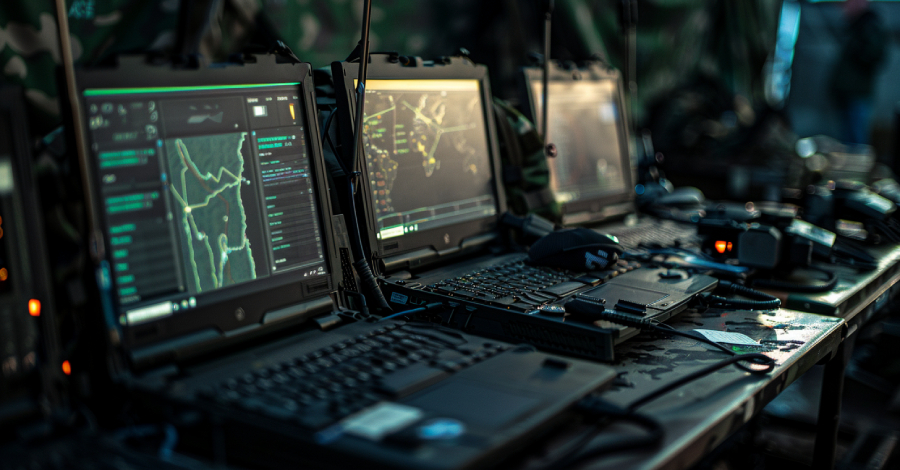
The U.S. government is actively moving to deploy AI capabilities across classified networks, with decision superiority as the stated goal. The logic is sound: AI that can compress the time between raw intelligence and operational action gives American forces a measurable edge. But the pace of that deployment is running ahead of the security frameworks designed to contain it, and agentic AI - systems that don’t just answer questions but take actions, make calls, reach out to external systems - raises the exposure in ways that traditional software deployment simply doesn’t.
What “Agentic” Actually Changes
A conventional AI model sits behind a query interface. You ask it something, it returns an output, a human decides what to do next. The security perimeter is relatively clear: control who can ask questions, control what data the model was trained on, and you’ve covered most of the ground.
Agentic AI doesn’t work that way. These systems initiate actions autonomously. They call databases. They query mission systems. They pass information to coalition partners. Every one of those outbound connections is a potential vector, and in a classified environment, it’s also a potential collapse point between compartments that are supposed to stay separated. The classification layer that took years of policy and infrastructure to build can be undermined by a single misconfigured agent workflow making calls it shouldn’t.
Three questions define whether an agentic AI deployment is safe or just fast. First, what is entering the model? Training data and commercial models moving into classified environments must be inspected before ingestion - stale or manipulated data doesn’t announce itself, and a model processing “poisoned” content will produce compromised assessments that look like normal outputs. Second, who and what can access the AI? Cleared analysts, coalition partners, edge operators, and AI integration teams all need governed access that enforces security boundaries without inadvertently merging networks that are meant to be separate. Third, where is the AI agent reaching back out? Every call a model makes to an external system must preserve the integrity of the classification layer it’s operating within. If agentic AI is going to compress operational timelines, the security boundary cannot be the first thing that breaks under pressure.
Infrastructure Is the Actual Problem
Most public conversation about AI security focuses on the model layer - adversarial inputs, training data poisoning, output manipulation. Those are real. But in defense and intelligence contexts, the more immediate risk sits in the infrastructure underneath the models, not in the models themselves.
Cross-domain data movement is where classified environments are most exposed. Information routinely needs to travel across classification levels, across compartments, across coalition boundaries, and into operational environments that may be physically austere and digitally constrained. Each of those transitions is a potential failure point. Without hardware-enforced controls and purpose-built cross-domain capabilities at those boundaries, the question isn’t whether a breach will occur - it’s whether anyone will notice when it does.
This is also where the “bolt it on later” approach to security collapses under its own weight. When AI tools are embedded into mission workflows first and secured second, the architecture of the deployment has already determined what protections are possible. Retrofitting access controls and classification enforcement onto an agentic system that was designed without them is not a security posture - it’s a liability with documentation. Defense organizations that are deploying AI now without addressing the network fabric beneath it are building a constraint into their own mission capability that will be expensive and disruptive to fix later.
What Secure Deployment Actually Requires
Everfox has positioned its cross-domain technology and hardware-enforced protection specifically for this problem - classified environments and the tactical edge, where AI needs to operate at mission scale without the security boundary becoming the weakest link in the chain. The company’s framing is direct: trusted infrastructure, strict access controls, and strong data governance are not optional features in these environments.
That framing is correct regardless of vendor. The requirements hold across any serious classified AI deployment.
Sensitive data moving across classification boundaries needs active inspection and policy enforcement before it reaches a model - not logging after the fact, but interception and validation at the boundary itself. Access governance for AI systems in classified contexts has to account for the full range of users: analysts with different clearance levels, coalition partners with different national boundaries, operators at the tactical edge with different connectivity profiles, and the AI agents themselves as distinct principals that require their own access controls. An AI agent is not a human user, and treating it like one in an access control framework is an architectural mistake.
The output side of the model is just as important as the input side. Every downstream action an agentic system takes - every database query, every system call, every data packet passed to a partner network - needs to be traceable and bounded. If an agentic AI can initiate actions that a cleared human operator would not be authorized to take directly, the governance model has a gap that operational pressure will eventually find.
Speed Is Not the Threat. Uncontrolled Speed Is.
There is a version of this argument that reads as resistance to AI adoption in defense contexts, a caution-above-all posture that treats security risk as a reason to slow deployment. That is not what the evidence supports.
The Claude Mythos incident - claimed access within hours of a limited technical preview - does not suggest that AI shouldn’t be deployed. It suggests that the security architecture around any deployment needs to be in place before the deployment happens, not scheduled for a later phase. The window between “live in a limited environment” and “accessed by unauthorized parties” being measured in hours means that “we’ll secure it after initial rollout” is not a viable timeline.
Frontier AI does offer a genuine decision advantage for defense and intelligence operations. The compression of analytical timelines, the ability to process intelligence across domains faster than human teams can manage, the potential to integrate sensor data and assessments in near-real-time - those capabilities are real, and the strategic value is significant. But an AI system operating on poisoned training data produces authoritative-looking outputs that are wrong. An AI agent operating without proper cross-domain controls can collapse the separation between classified compartments. An AI tool embedded in mission workflows without access governance creates accountability gaps that adversaries can probe.
The question is not whether to deploy AI in classified environments. The question is whether the network fabric beneath it is built to carry it safely - and right now, in many cases, it isn’t.
Everfox’s cross-domain hardware enforcement and the broader infrastructure requirements it represents aren’t a constraint on AI capability. They’re the precondition for AI capability that can actually be trusted. A model that produces sound assessments in a lab but operates on a network without classification enforcement is not a defense asset. It’s an uncertainty in the chain of command, and uncertainty in that chain has a cost that doesn’t appear on any procurement spreadsheet.
The Claude Mythos access claim involved hours. Most classified AI deployments are planned in months.