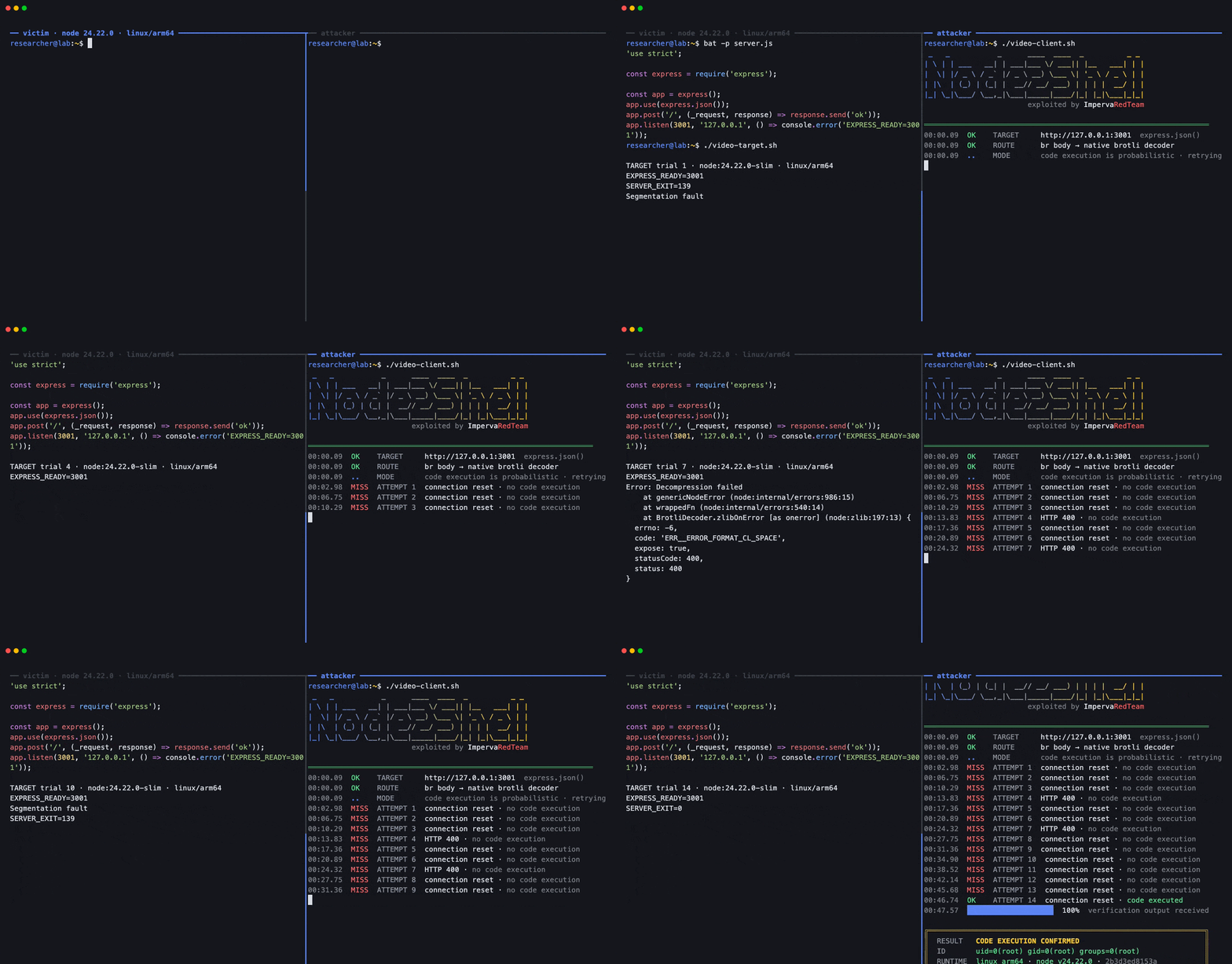
Some attacks this week didn’t need much of a trick. A fake support call, a trusted extension, a shared link, or a device with no password — small things that people barely think about, yet each was enough to cause serious trouble.
Then there were the bigger messes: billions stolen, hidden networks of hacked devices, poisoned software, and attackers finding new ways to turn normal tools against their users. Even the places meant to keep money and systems safe ended up with problems of their own. The strange part is how often the damage started somewhere nobody was looking.
Here’s what made the list this week.
⚡ Threat of the Week
N. Korea Sets New Record with Binance $6.43B Crypto Theft — The U.S. Federal Bureau of Investigation (FBI) has officially attributed the theft of more than $6 billion in virtual assets from Binance to a North Korean hacking group called TraderTraitor. The haul eclipses the $1.46 billion plundered from Bybit in February 2025, making it the largest cryptocurrency theft in history. The funds were stolen across 11 blockchains, 82% of which were on Ethereum and Bitcoin. Of the $6.43 billion stolen by TraderTraitor, $2.85 billion of the assets have been frozen on-chain by Tether, Circle, Ripple, Arbitrum, and Optimism.
🔔 Top News
-
Volt Typhoon Uses Covert Silent Train Network in 0-Day Attacks — Chinese state-sponsored hacking group Volt Typhoon has been using a framework that relies on rotating chains of connected devices compromised on demand, including to facilitate zero-day attacks targeting high-value systems. It’s codenamed Silent Train because the threat actor uses it against select targets, cleans it up after each operation to minimize detection and attribution, and refreshes it continuously. Silent Train is a relay infrastructure formed of compromised devices to hide the origin of its attacks. The findings highlight evidence of efforts to pre-position access within strategic communications, critical infrastructure, and other ecosystems that become essential during geopolitical tensions or crises. Silent Train is built around “rapidly rotating chains of compromised SOHO, IoT and enterprise devices,” with victims selected to maintain access to ecosystems supporting defense, logistics, communications, and military and civilian operations — especially during heightened tensions in the Indo-Pacific region.
-
Polymarket Briefly Suspended Trading After Third-Party Hack — Prediction market platform Polymarket temporarily suspended trading after hackers compromised DebugBear, a third-party service, to distribute cryptocurrency-draining JavaScript that siphoned approximately $2.7 million in assets from 33 deposit wallets in under an hour. “Our DNS server records were compromised through our domain registrar. We are currently unable to receive emails sent to our domain,” DebugBear said on October 31, 2026. “Based on our initial investigation this attack targeted the website of a specific customer. We have not seen any indication of a compromise of our internal systems, though we will continue to investigate this.” In June, Polymarket disclosed another third-party compromise that injected a malicious script into its frontend, leading to reported losses of around $3 million.
-
Shared ChatGPT Links Lead to Code Execution — Researchers from Parameter Labs disclosed a now-patched flaw in ChatGPT that turned an ordinary share link into attacker-controlled JavaScript running inside the signed-in session of whoever opened it. “An attacker could create a malicious conversation, publish it using ChatGPT’s normal sharing feature, and send the link to another user,” Parameter Labs said. “When the victim opened the share, the payload executed as chatgpt.com with access to the victim’s authenticated web session.” Successful exploitation could allow an attacker to enumerate the victim’s conversation list, retrieve content from a private conversation, and send that data to an external server.
-
Official Claude Code Extension on Cursor Marketplace Shipped with SSH Backdoor — Two versions of the Claude Code extension distributed through Cursor Marketplace were tampered with to install a persistent SSH backdoor on affected systems. Cursor said the incident impacted up to 5,000 users. In response, Cursor rotated its keys, rebuilt the marketplace, and worked with its cloud provider to take the malicious server offline, rendering the reverse shell non-functional. Cursor also confirmed that no other extensions were maliciously modified as part of the attack. Several questions surrounding the supply chain attack remain unanswered, including how the threat actor managed to publish a malicious extension under Anthropic’s name and what level of access they were able to obtain.
-
FBI Seizes Bulletproof Hosting Provider Virtualine — The U.S. Department of Justice (DoJ) announced the seizure of a domain associated with a bulletproof hosting provider (BPH) named Virtualine. The DoJ said the service was being used to facilitate prolific criminal activity, including the advertisement of sexually explicit images of minors, the nonconsensual distribution of intimate images of adults and minors, and international money laundering. However, the long-term impact of such crackdowns has been questioned. According to Intel 471, disruptions have driven customers to newer services operated by former resellers, fragmenting the market rather than eliminating demand. Separately, the Australian Signals Directorate said it gained backend access to Amadey’s operations and severed its access to 180,000 computers across the globe.
-
Keystone to Destroy 18,835 Hardware Wallets — Keystone confirmed a security incident involving its official website in which an attacker exploited a vulnerability in a third-party data monitoring tool to escalate privileges and obtain customer information along with a key used to verify device authenticity. The breach exposed 25,964 records containing names, contact details, shipping addresses, and order information, as well as 12,873 checkout records. Keystone plans to destroy 18,835 devices in existing inventory that contain the compromised key and has suspended shipment of all pending orders while production transitions to devices using the new key. In a related development, hardware wallet maker Trezor said it received credible reports of a suspected hardware crypto-theft implant in a Trezor Safe 5 sold by reseller CryptoBilis in Southeast Asia, warning customers who purchased from CryptoBilis from March 2026 onwards to move their funds to a newly created wallet with a new seed immediately.
-
uCreator Android Spyware Can Clone WeChat Accounts — A commercial Android spyware offering called uCreator is designed to target users of mobile wallets and messaging applications across China and Southeast Asia, including GCash, WeChat, WeCom, QQ, Telegram, WhatsApp, LINE, Zalo, KakaoTalk, Viber, and MoMo. It can also clone WeChat accounts. Victims install repackaged copies of legitimate applications distributed through sideloading or social engineering. The attack leverages a variation of on-device virtualization techniques observed in malware like GodFather. “GodFather spins the banking app up inside a virtual container and drops a fake overlay on top to phish credentials,” security researcher Ovi Liber said. “uCreator shares the substrate but draws no overlay. This is a case of overlay-the-app versus instrument-the-app, with the second being quieter and not being confined to a login screen. As an operator, it scales to any app the vendor writes a module for.”
-
Gheist Turns GitHub Actions into a Secret Extraction Service — An automated campaign dubbed Gheist has been observed planting a secret-dumping workflow named “sync-check” in every repository that stolen GitHub tokens can reach. “The workflow seeks to print the repository’s secrets into its own workflow log,” Wiz said. “Then, the tool downloads the log through the GitHub API and deletes the run seconds later.” The Google-owned cloud security company recovered more than 13,500 planted branches across affected repositories, underscoring the scale and automation behind the campaign.
This week’s incidents are a reminder that high-impact breaches often begin with overlooked access points — a compromised third-party service, a tampered extension, or a stolen token. Defenders should treat supply chain exposure and credential hygiene as ongoing priorities rather than one-time checkboxes.