

The Remus infostealer collects Gmail messages through a stealthy malicious Chrome extension. Its operators marketed this capability as a zero-day exploit in Google’s email service.
The “zero-day” claim
On November 8, the Remus developer began advertising an alleged Gmail zero-day that let the malware keep collecting emails even after victims changed their passwords and revoked all sessions.
Threat intelligence firm Hudson Rock investigated the claims but reached inconclusive results. Evidence from the malware’s customers matched the seller’s pitch, but there was no technical proof that a zero-day vulnerability was being exploited.
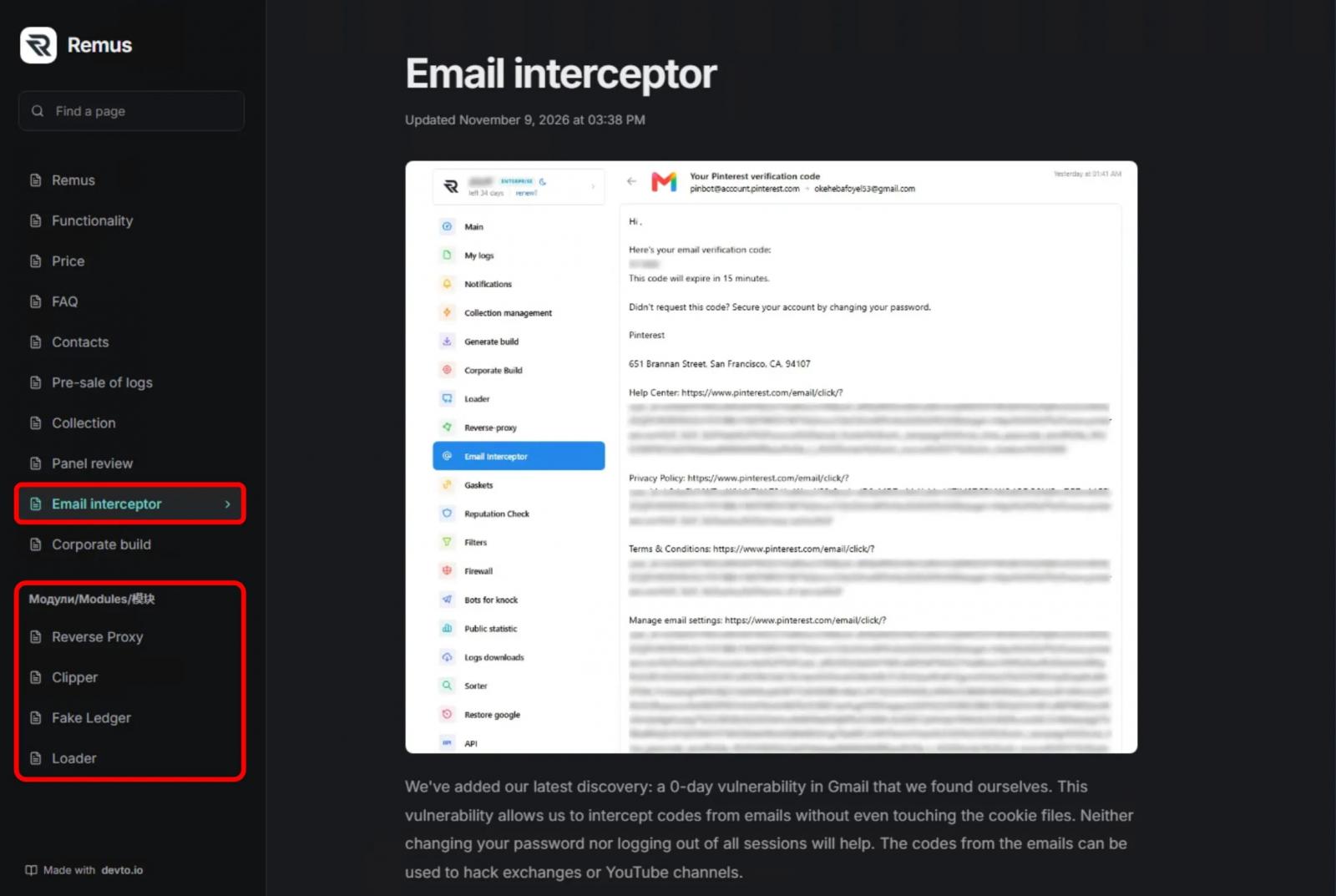
Remus stealer panel. Source: GenDigital
What researchers found
GenDigital and Invoke RE independently published findings showing that the advertised “zero-day” was simply a malicious Chrome extension installed in victims’ browsers.
The extension targets unread emails in signed-in Gmail accounts. It persists through password changes and session revocations because it stays installed in the victim’s Chrome browser. Its access ends when the active session ends and resumes when the victim signs in again.
GenDigital found the extension while reverse-engineering Remus. The researchers saw no email-stealing module in the malware itself, which suggested the functionality was delivered through an add-on.
GenDigital’s analysis shows that the loaded module is a native DLL whose only job is to install the extension in Chrome, the only browser it targets. The extension is bundled inside the DLL as an unencrypted ZIP archive in the .rdata section.
Getting around Chrome’s restrictions
Chrome 137 and later removed a command-line option that malware could use to load extensions. Remus works around this by editing the victim’s Chrome profile to register the extension, then turning on Developer Mode, which unpacked extensions require.
The extension is named “Google Sheets,” copies the description of Google Docs Offline, and requests access to all websites.
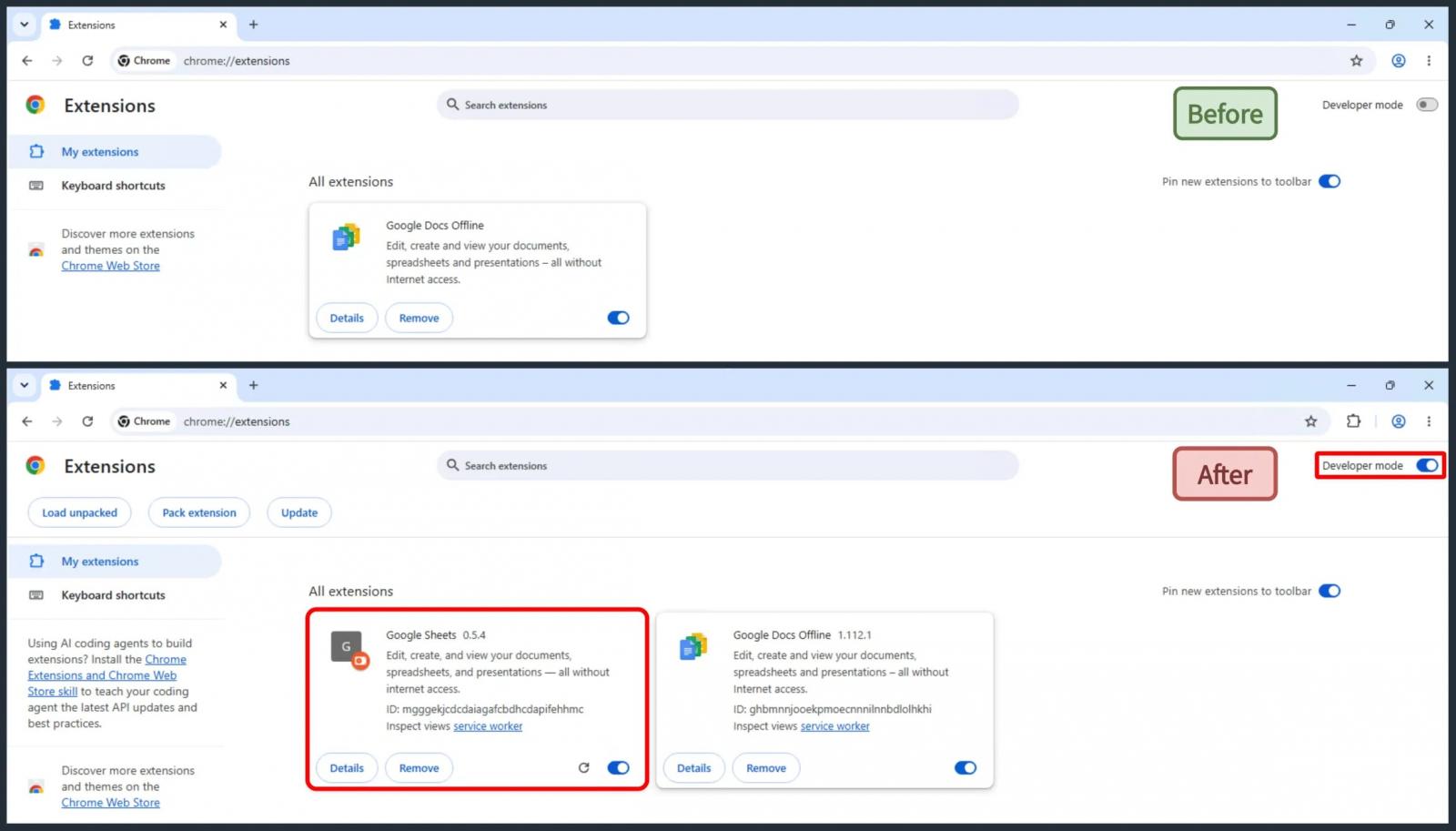
Installed malicious extension. Source: GenDigital
How the theft works
Once active, the extension checks for unread emails every minute across up to 10 account slots and retrieves them in full, in raw format. It sends the subject, message body, sender, and the victim’s email address to its command-and-control server, along with a campaign identifier.
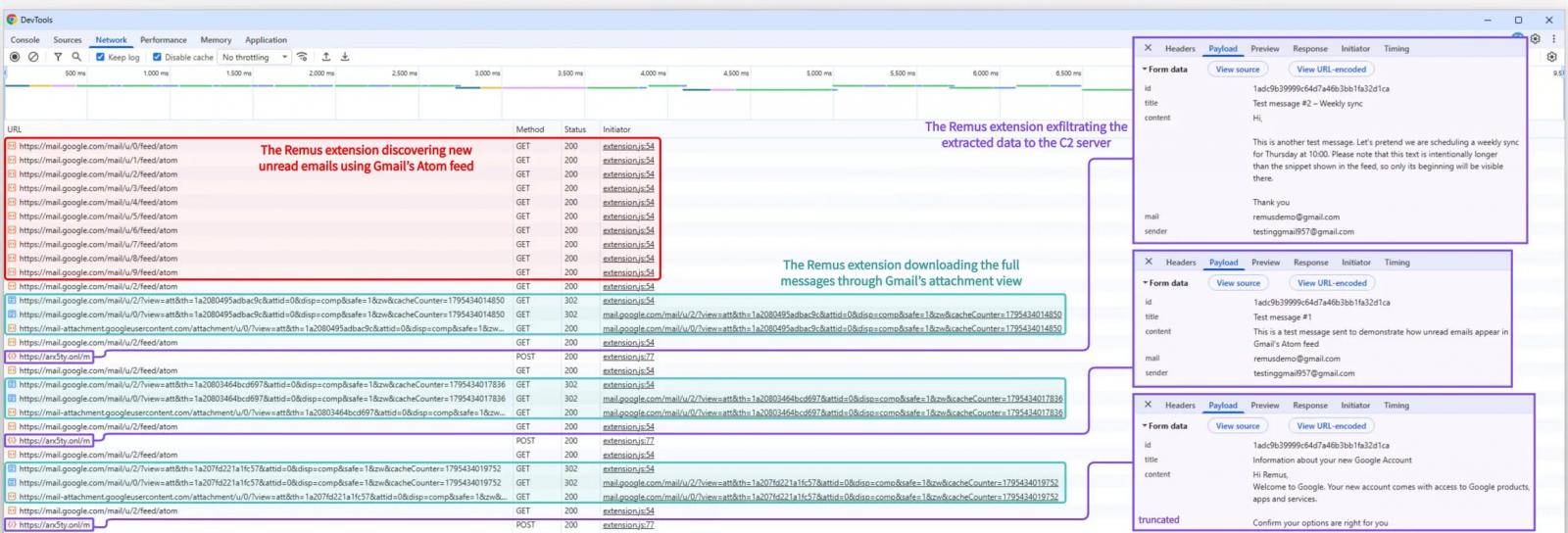
Email theft. Source: GenDigital
Failed uploads are queued and retried. A local record tracks which messages were sent successfully so duplicates are not uploaded.
The extension also parses attachment filenames but does not send them to its operators, so that feature may not be fully implemented yet.
Defending against Remus
Users should download software only from trusted sources. They should also check “chrome://extensions” for rogue installations and for unexpected activation of Developer Mode, since either can indicate this kind of compromise.